Raymon Stephens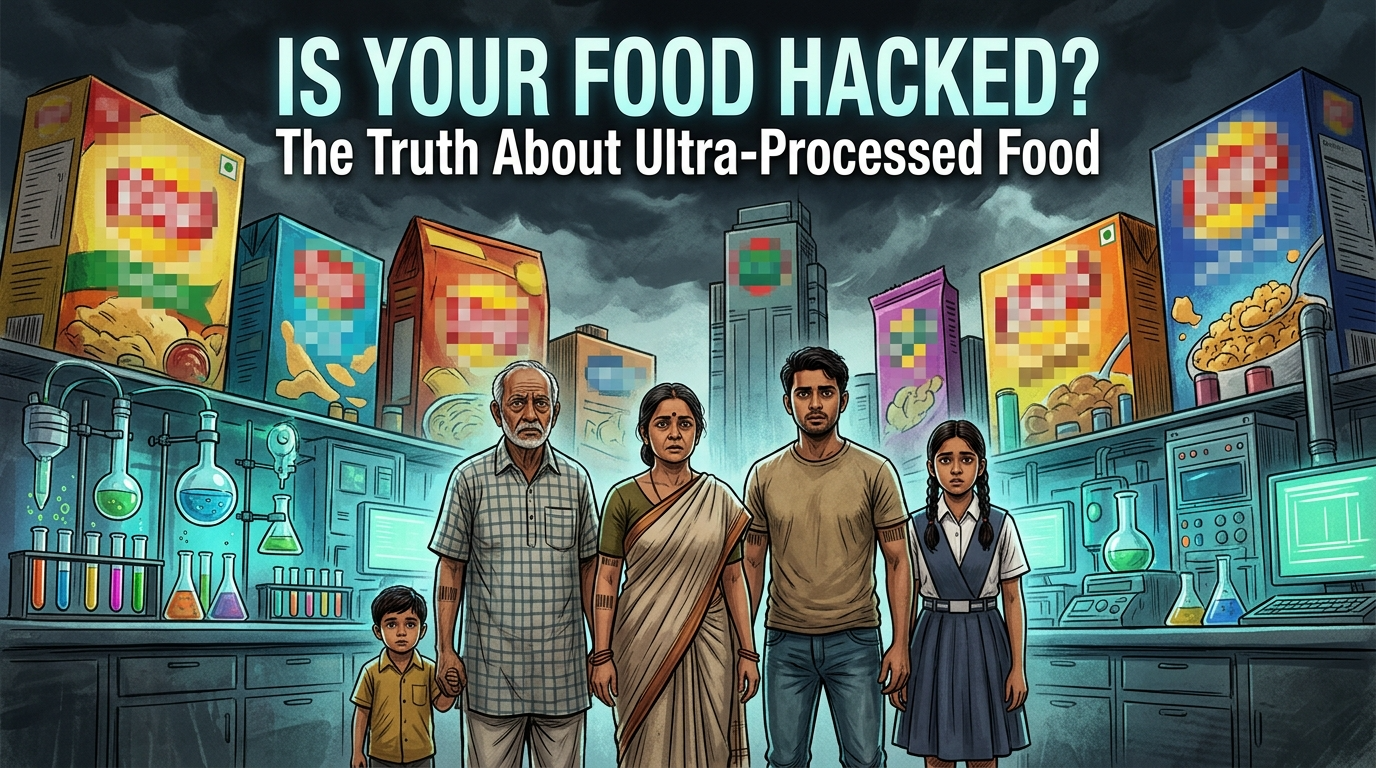
We’ve all been there. It’s late, you’re tired, and suddenly that bag of chips in the cupboard is calling your name. You tell yourself you’ll just have one. Ten minutes later, you’re shaking the crumbs out of the bottom of the bag, feeling a mix of regret and confusion.
Most people blame a “lack of willpower.” But here’s the cold, hard truth: The battle was rigged before you even opened the bag.
While we like to think of food companies as groups of chefs making tasty meals, the reality is much more clinical. Today’s giant food corporations aren’t just selling nutrition; they are selling “brain hacks.” Here’s how the industry uses neuroscience to turn your appetite into their profit.
1. The “Bliss Point”: Why You Can’t Stop at One
Ever wonder why a homemade cookie satisfies you after two, but you can eat an entire sleeve of store-bought ones? It’s all about the Bliss Point.
Coined by legendary food scientist Howard Moskowitz, the Bliss Point is a precise mathematical ratio of salt, sugar, and fat. It’s designed to hit the “sweet spot” of pleasure without being so overwhelming that your brain tells you to stop. This bypasses a biological process called sensory-specific satiety—the mechanism that usually tells your brain, “Okay, we’ve had enough of this flavor.” By keeping the flavor profile “broadly addictive” rather than “distinctly filling,” they ensure you keep reaching for more.
2. Vanishing Calories: The “Magic” of Ultra-Processed Food
Have you ever noticed how some snacks—like Cheetos or certain puffed grains—seem to literally disappear the moment they touch your tongue?
In the industry, this is called vanishing caloric density. When food melts quickly, your brain gets confused. It perceives that you aren’t actually consuming many calories because there’s no “bulk” in your mouth. Since your brain doesn’t think you’re eating, it never sends the signal that you’re full. You end up consuming hundreds of calories before your stomach even realizes it’s been fed.
3. The “Health Halo” Trap
As we become more health-conscious, food companies have adapted. They use what marketers call the “Health Halo” to make junk food look like a wellness choice.
You’ve seen the buzzwords:
- “Multigrain” or “Digestive”: Often just refined flour with a tiny sprinkle of fiber.
- “Protein Enriched”: Sometimes just a standard candy bar with a side of whey and a 300% price markup.
- “Natural”: A term so loosely regulated it’s practically meaningless.
The trick is always on the back of the pack. A “sugar-free” biscuit often compensates for the lost flavor by tripling the sodium content. When they take one “bad” thing out, they usually pump two more in to keep you hooked on that Bliss Point.
4. Double Standards: Why India is a “Lab Rat”
Perhaps the most frustrating part of this industry is the global double standard. Recent investigations have shown that global brands often sell “cleaner” versions of their products in Europe (where regulations are strict) while loading the exact same products with sugar and additives in markets like India, Africa, and Southeast Asia.
For example, certain infant cereals sold in the UK have zero added sugar, while the versions sold in India contain nearly two teaspoons per serving. We aren’t just a market; in many ways, we are being treated as a laboratory for high-fructose experimentation.
How to Take Your Power Back
It feels overwhelming, but you aren’t powerless. Transitioning away from ultra-processed addiction starts with a few simple habits:
- The 3-Ingredient Rule: When you flip the package, look at the first three ingredients. In many “healthy” cereals or drinks, sugar (or its many aliases like maltodextrin or corn syrup) is usually right at the top.
- Ignore the Front, Read the Back: The front of the box is an advertisement; the back is the truth. If you can’t pronounce half the ingredients, your body probably won’t know how to process them either.
- Reclaim Your Palate: It takes about two weeks to “reset” your taste buds. Once you cut back on hyper-palatable snacks, real food—like a piece of fruit—actually starts to taste sweet again.
The Bottom Line
Your struggle with junk food isn’t a character flaw—it’s a biological reaction to a very expensive piece of engineering. By understanding the “why” behind your cravings, you can stop being a subject in their experiment and start making choices that are actually your own.


 News Desk
 Alok Kumar